

Introduction
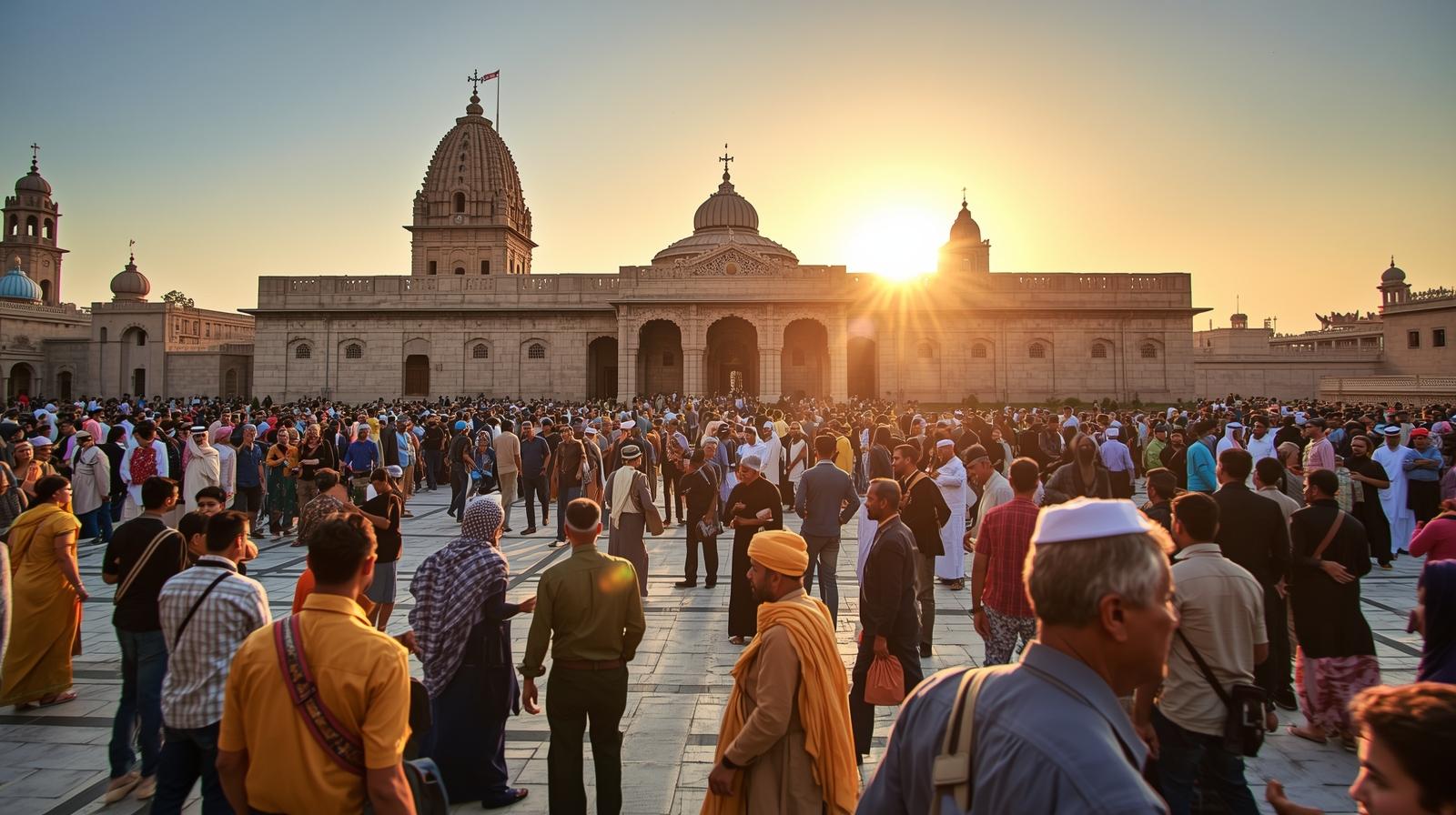
The United Arab Emirates presents a unique model in the Muslim world: a nation where Islam is the official religion and the bedrock of national identity, yet which actively fosters an environment of religious tolerance and pluralism. This commitment is not merely theoretical; it is visibly embodied in the presence of churches, a Sikh gurudwara, and most recently, the first traditional stone Hindu temple in the Middle East. The story of these houses of worship is a powerful narrative of how the UAE has transformed its cosmopolitan demographic reality into a principled policy of coexistence, reflecting the Islamic values of respect and the visionary leadership of its founders.
A Historical Foundation of Coexistence
The UAE’s tradition of tolerance has deep roots. As a historical crossroads for trade, the coastal communities of the Gulf have long interacted with people of different faiths from India, Persia, and beyond. The founding father, Sheikh Zayed bin Sultan Al Nahyan, embodied this spirit. He was known for his open-mindedness and his belief that the presence of diverse communities strengthened the nation. He famously stated, “We believe that the purpose of any religion is to worship God and to treat others with tolerance and respect.” This philosophy provided the ethical foundation upon which the modern policy of tolerance was built.
The Christian Churches: Early Pillars of Interfaith Dialogue
The establishment of Christian churches began in the early days of the federation. The first complex, in what is now the Oud Metha area of Dubai, was granted land by the late Sheikh Rashid bin Saeed Al Maktoum in the 1960s. Today, this area, along with similar zones in Abu Dhabi and other emirates, hosts multiple churches catering to a wide range of denominations, including Catholic, Protestant, Coptic Orthodox, and others. On any given Sunday, these compounds are bustling with thousands of worshippers. The UAE government not only provides the land but also ensures the security and smooth functioning of these communities, viewing them as an integral part of the nation’s social fabric.
The Grand Hindu Temple: A Monumental Step
The announcement and construction of the BAPS Hindu Mandir in Abu Dhabi marked a watershed moment for interfaith relations in the region. This is not a simple prayer hall but a massive, traditional stone temple carved by artisans in India and assembled in the UAE. Inaugurated in 2024, it stands on land gifted by the UAE leadership and has been praised as a “beacon of harmony” by His Highness Sheikh Mohamed bin Zayed Al Nahyan. The temple’s very existence is a powerful symbol, demonstrating that the UAE’s commitment to tolerance extends beyond the Abrahamic faiths to embrace the spiritual needs of its large Hindu community in the most profound way possible.
The “Abrahamic Family House”: A Uniquely Bold Vision
Taking interfaith dialogue to an unprecedented level, the UAE unveiled the “Abrahamic Family House” on Saadiyat Island in Abu Dhabi in 2023. This groundbreaking complex houses three purpose-built monuments of faith side-by-side: the Imam Al-Tayeb Mosque, the St. Francis Church, and the Moses Ben Maimon Synagogue. The complex also includes a shared visitor pavilion and is designed to be a center for learning and dialogue. This project is a physical manifestation of the UAE’s belief in the shared roots and common values of the three Abrahamic faiths, promoting a message of peaceful coexistence to the entire world.
Conclusion: A Blueprint for a Pluralistic Future
The UAE’s approach to religious tolerance is a pragmatic and moral response to its diverse population. By actively facilitating the construction of churches, a grand Hindu temple, and the revolutionary Abrahamic Family House, the government has moved beyond passive acceptance to active endorsement of pluralism. This policy strengthens social cohesion, fosters mutual respect among its residents, and enhances the country’s standing as a global hub for culture and dialogue. In a world often fractured by religious conflict, the UAE stands as a compelling example, proving that a strong Islamic identity and a deep commitment to interfaith tolerance are not just compatible, but can be mutually reinforcing pillars of a modern, prosperous, and peaceful society.